Library prep protocols



Reference: MYRA9
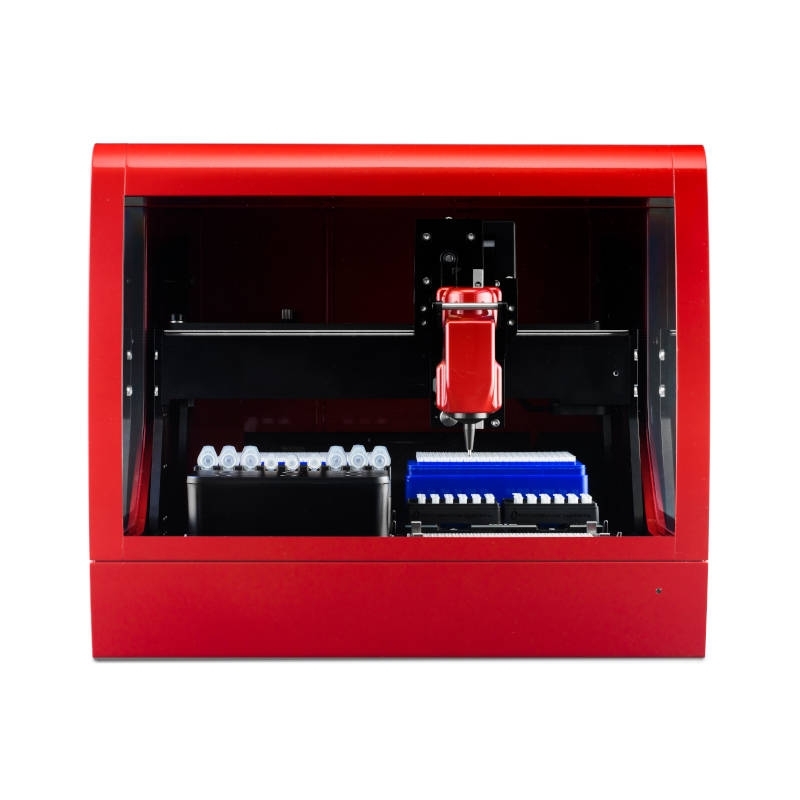
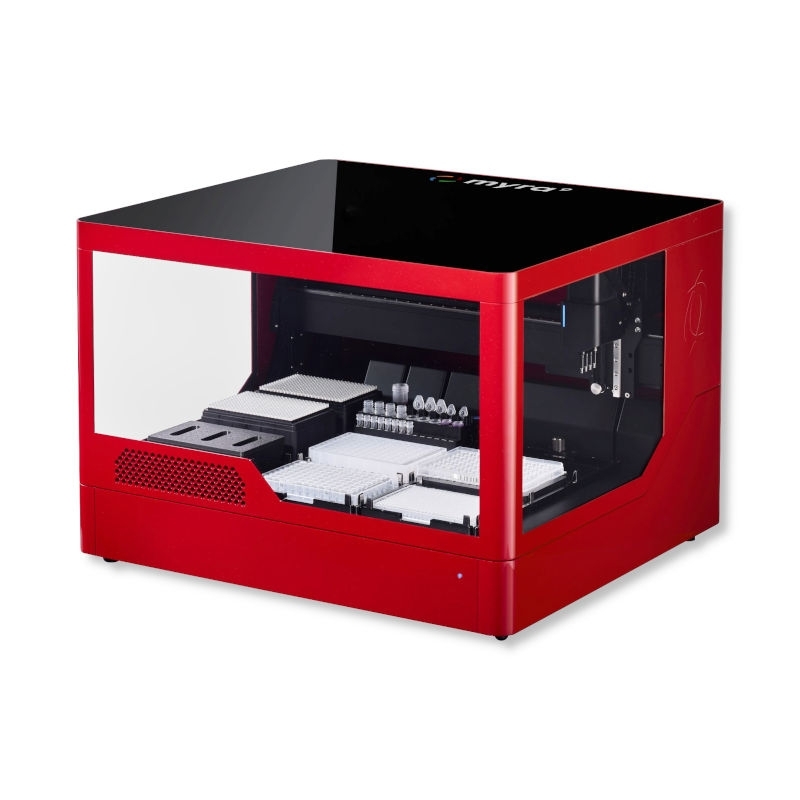
A small pipetting robot with a vision to perfection. The world’s first liquid handling system that can see.
Features :
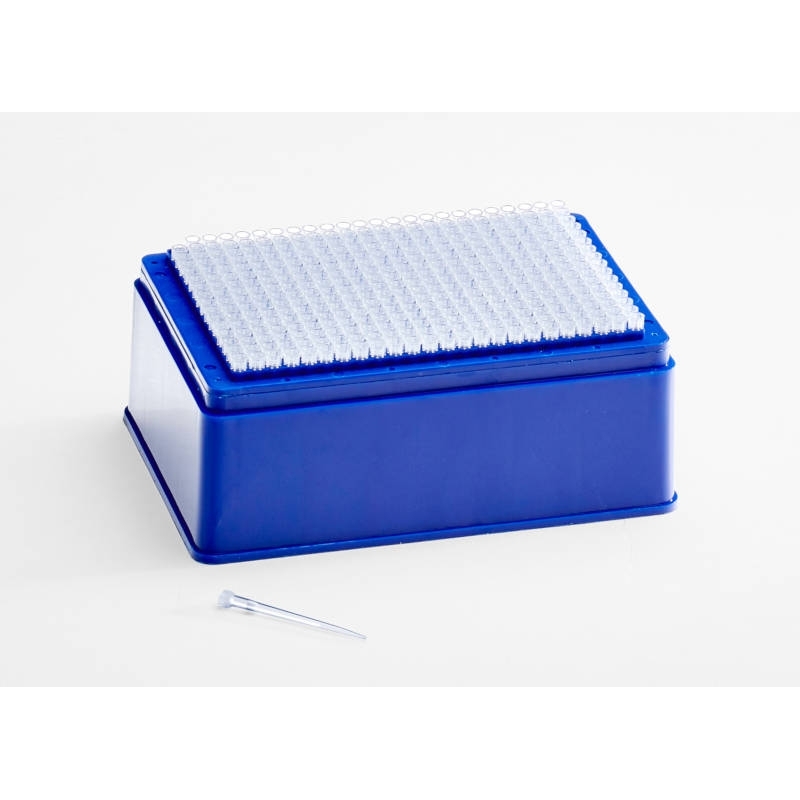
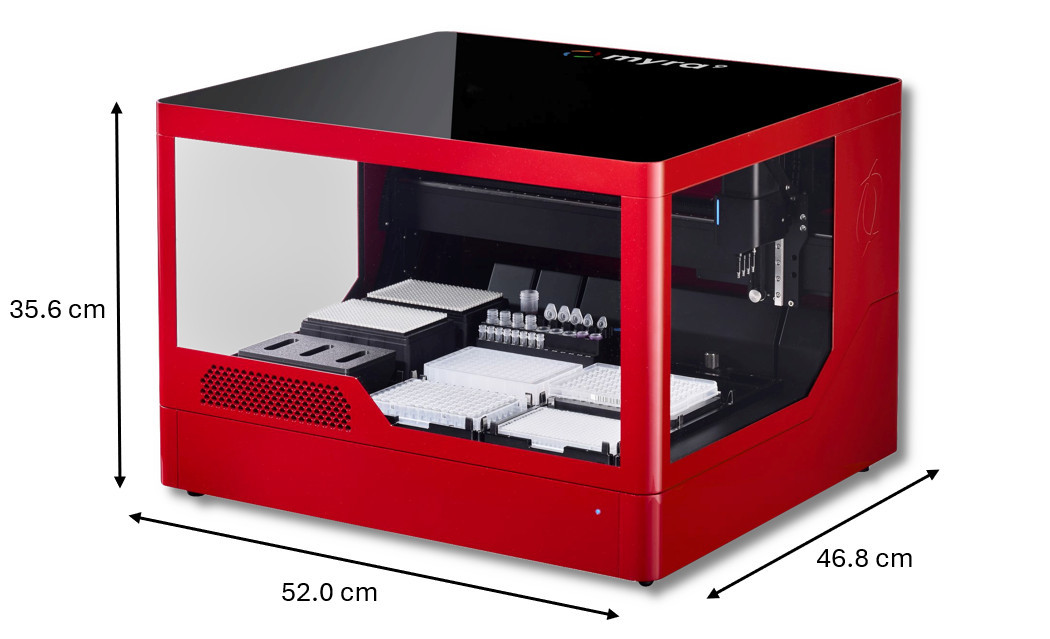
A dynamic design with style and function. At less than 17 kg and a footprint of less than 2,500 cm2, Myra9 is half the size of other in class liquid handling systems. A closed pipette tip waste container and the use of 384 tip boxes drastically minimise the footprint area. UV LED lights and a compact HEPA filter reduce the chances of qPCR contamination. The compact design of both parts reduces size and weight of the Myra unit.
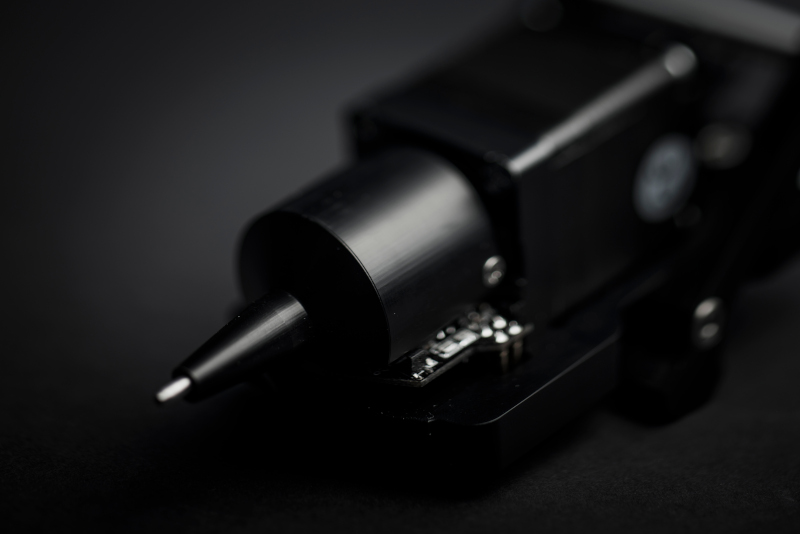
Pipetting is more than a mechanical task — it’s a precise balance of vision, touch, and judgment. It’s a nuanced process that blends motor control with cognitive insight, as operators instinctively adapt to fluid properties and positioning through sensory feedback and experience.
The AI-powered liquid handling system captures this complexity. With real-time computer vision and dynamic sensing, it identifies labware, reads liquid characteristics, and adjusts technique accordingly.
It doesn’t just execute commands — it perceives, adapts, and learns. The result is a smarter, more refined approach to liquid handling that preserves human finesse and scales it through intelligent automation.
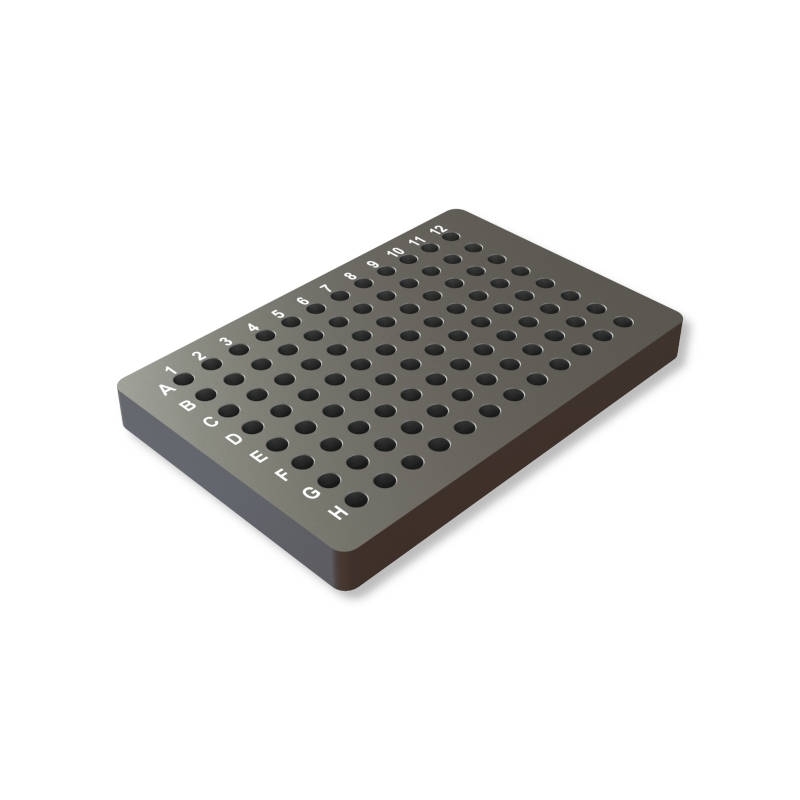
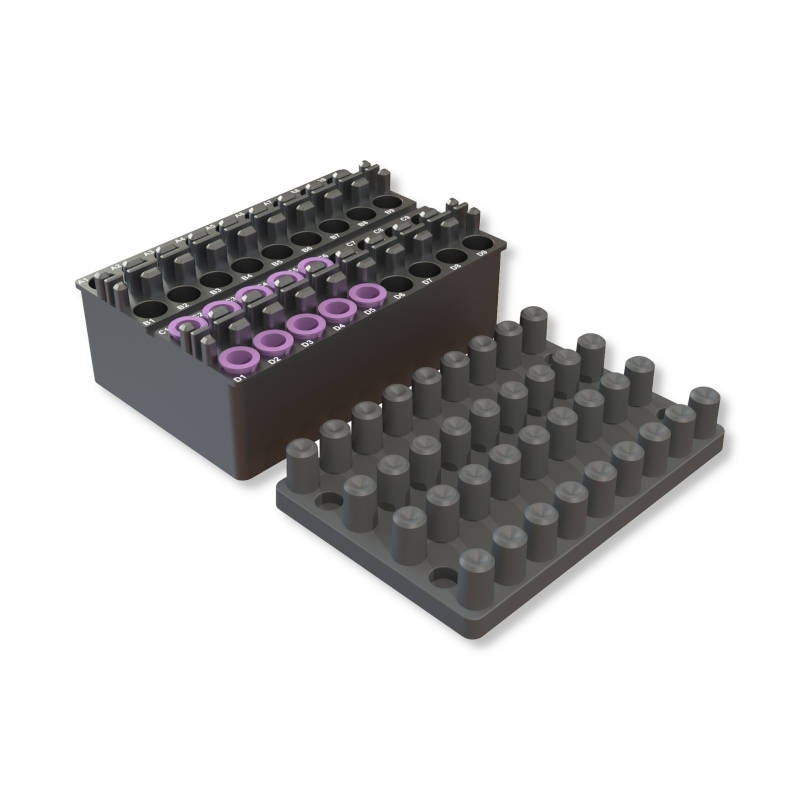
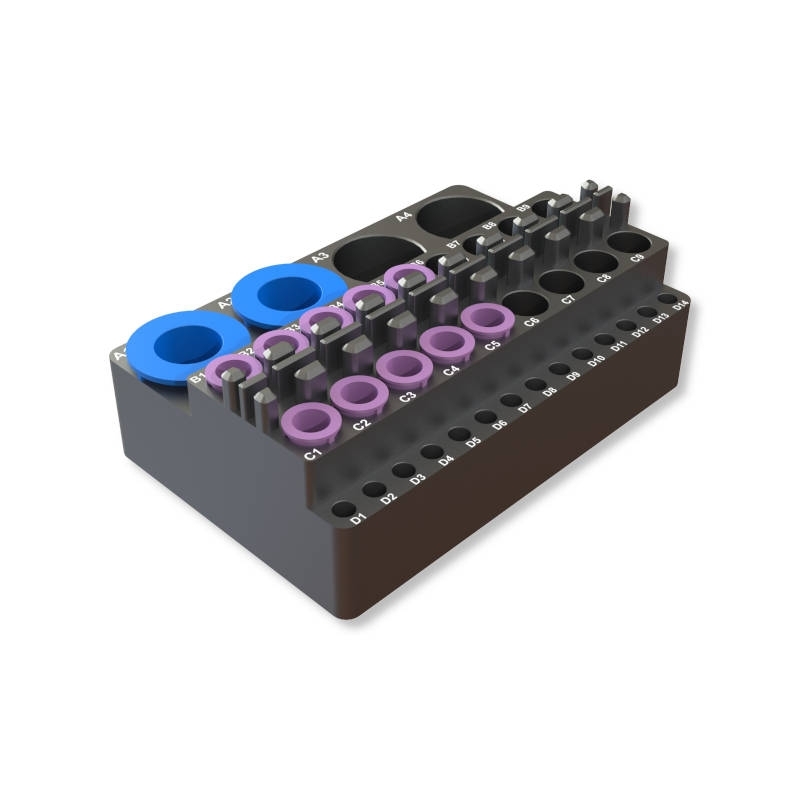
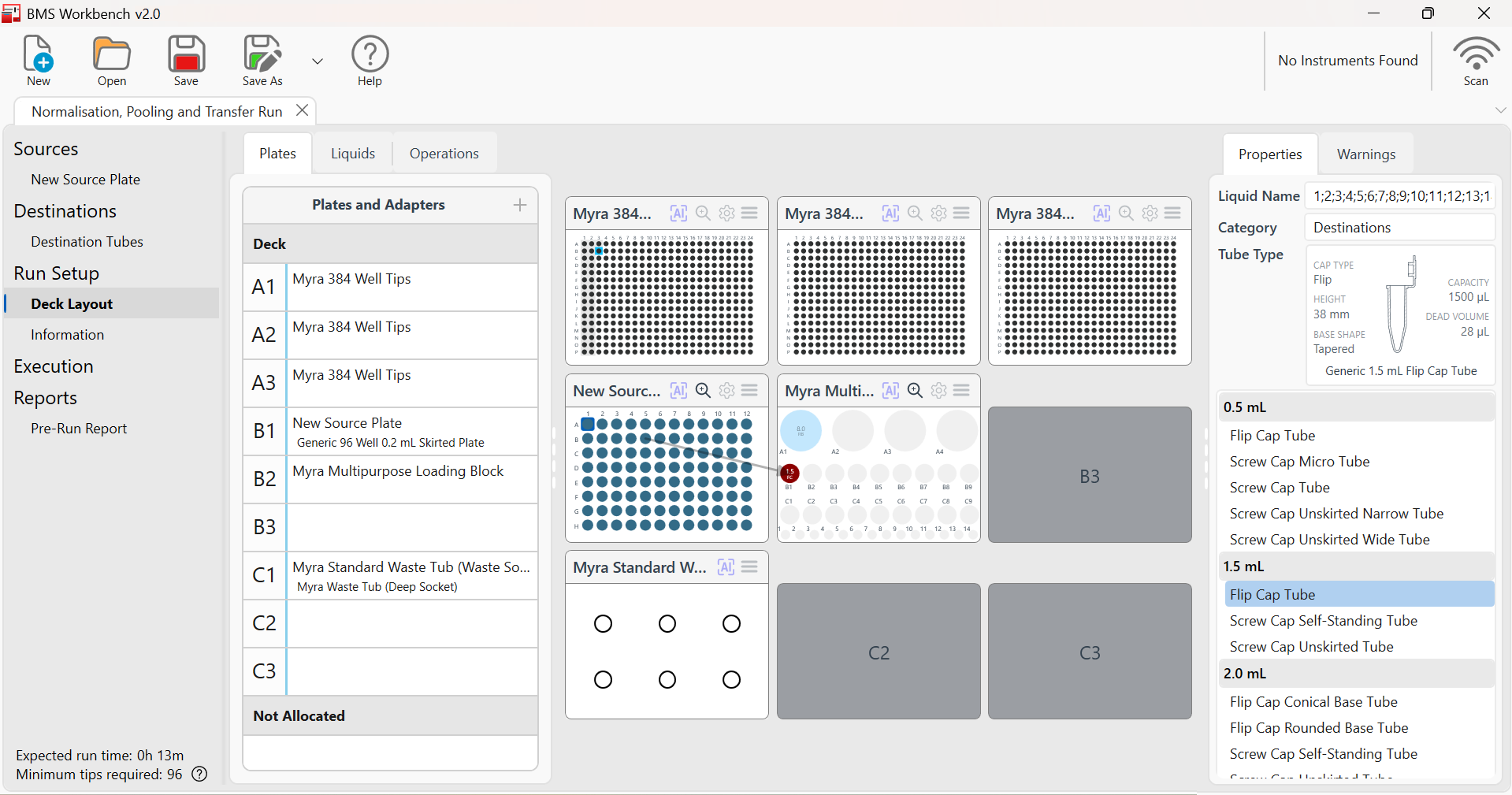
Laying out your deck takes no time or effort. Select the plates you need or use a predefined default. Move your reagent components, intermediate mixes, and templates over to the plates and you’re done. Almost all plate positions can be used as a template, mix, reagent or reaction. This level of flexibility opens up a lot more room on your deck. We cater for most generic tube types so finding the right plate won’t be a problem.
You don’t find your tube type ? No problem – the software lets you define your own. How nice is that.
24 samples validation using the Illumina DNA Prep kit. Libraries displayed low variability across replicates, even barcode balance, and high coverage of sequence alignments.
Experimental setup
To demonstrate capability, 8-sample and 24-sample plates of 150 ng of input DNA (48 kB genome Lambda DNA and Human Genomic DNA) were prepared on the Myra Liquid Handling System. Manual preparation of an 8-sample plate of 150 ng of input DNA (48 kB genome Lambda DNA) was also performed as a comparison method. The quality of these libraries were checked with BiOptic Qsep1-Plus bio-fragment analyser (Figure 1). The libraries were quantified using NEBNext Library Quant Kit for Illumina with reaction setup on the Myra Liquid Handling System and amplification on the Mic qPCR Cycler. Libraries were simultaneously normalised and pooled to 2 M using the Myra Liquid Handling System, then sequenced on a 2×150 bp flow cell on an iSeq 100 System for whole genome sequencing. Q30 and percentage PF were used to show the quality of the libraries. Sequencing data was demultiplexed using Illumina’s BaseSpace Sequence Hub and coverage maps of the Lambda genome were analysed using Geneious Prime 2022.2.2.
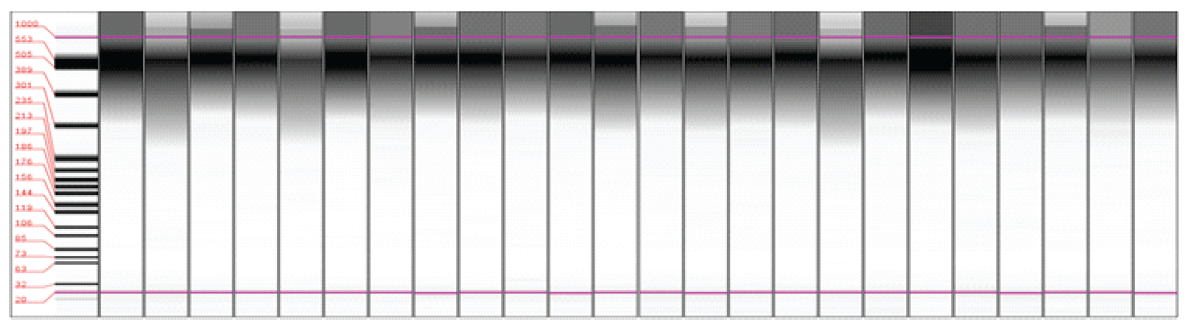
Figure 1. Capillary electrophoresis gel of library quality analysed on BiOptic Qsep1-Plus with S2 Cartridge for 24-plax Lambda libraries. Consistent size and intensity was achieved for all 24 libraries indicating good library prep on the Myra liquid handling system.
Results
We were able to successfully generate high-quality 8-plex and 24-plex DNA libraries on the Myra, with comparative performance to the manual method (Figure 2). Fragment analyzer results show consistent fragment sizes across all 24 DNA libraries (Figure 1). The quality of the sequencing runs were comparative with Q30 score > 90% for all methods. Barcode balance was also accurate, with variability less than the manual method. Sequencing coverage of the Lambda genome also showed consistent uniformity across 8-plex and 24-plex DNA prep libraries constructed on the Myra. The sequence data showed low sample variability and reliable uniformity for libraries prepared using Illumina DNA Prep.
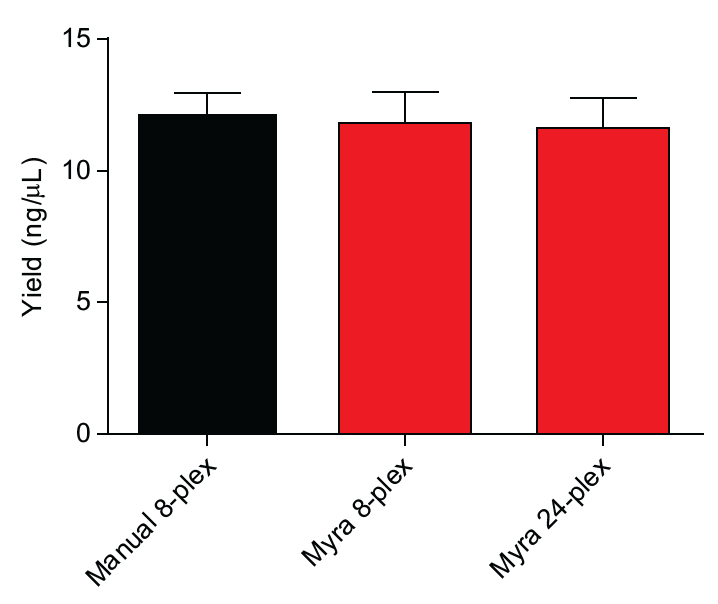
Figure 2. Mean library yield for DNA processed on Myra vs. manual preparation
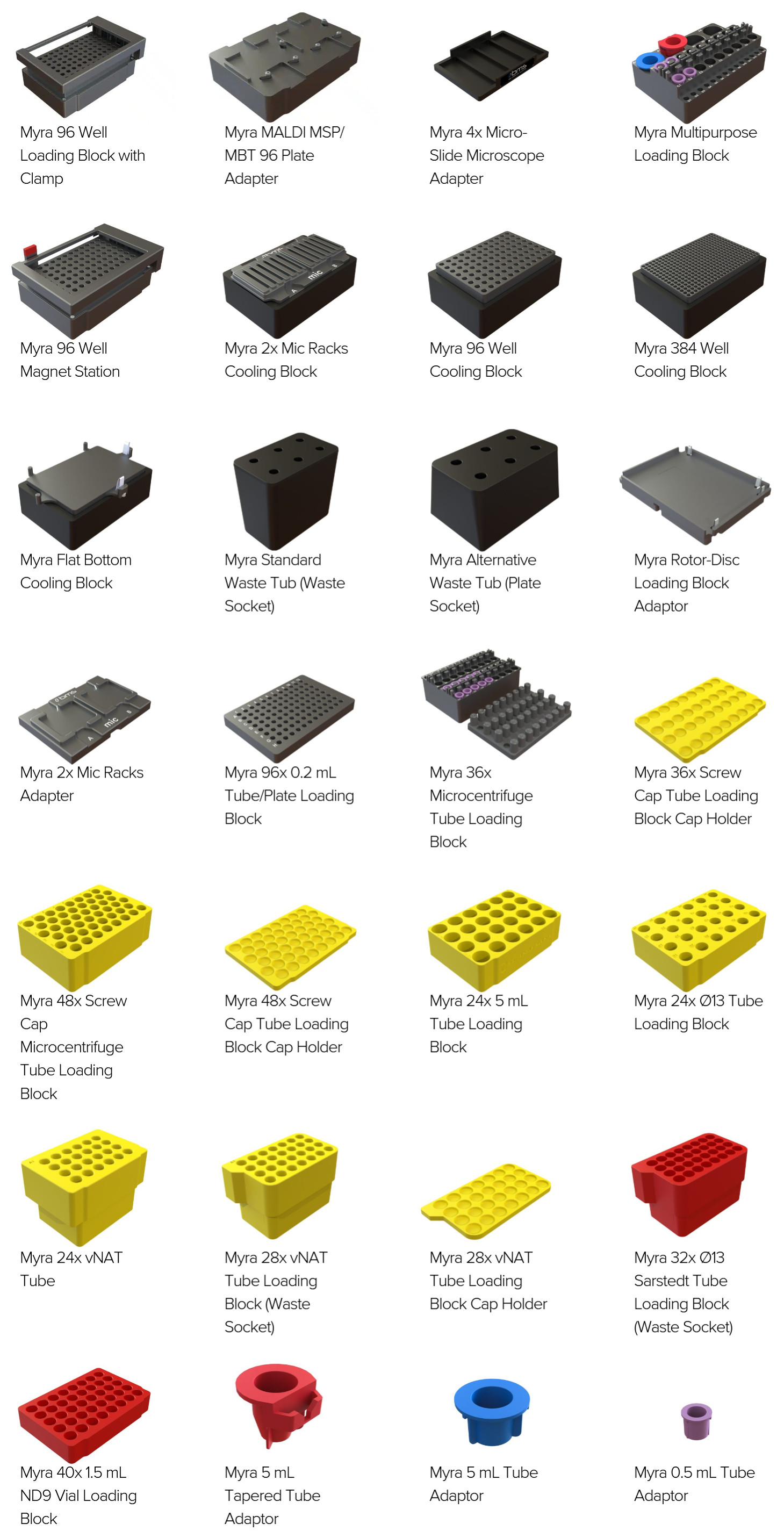
The Myra liquid handling system comes with a comprehensive list of accessories, supporting most tubes and plates available on the market.
Eye can do it. With a world first integrated high precision camera, achieving calibration on a liquid handling system has never been this easy. Simply click to the middle of the tube image, and let the software do the rest.
Only calibrate what you need. Why spend all day calibrating tubes you won’t even use. The Myra software will only require calibration of tubes that are in use. All calibration is recorded to the robot so no need to worry about doing it all again if you change computers or need to exchange the pipette head.
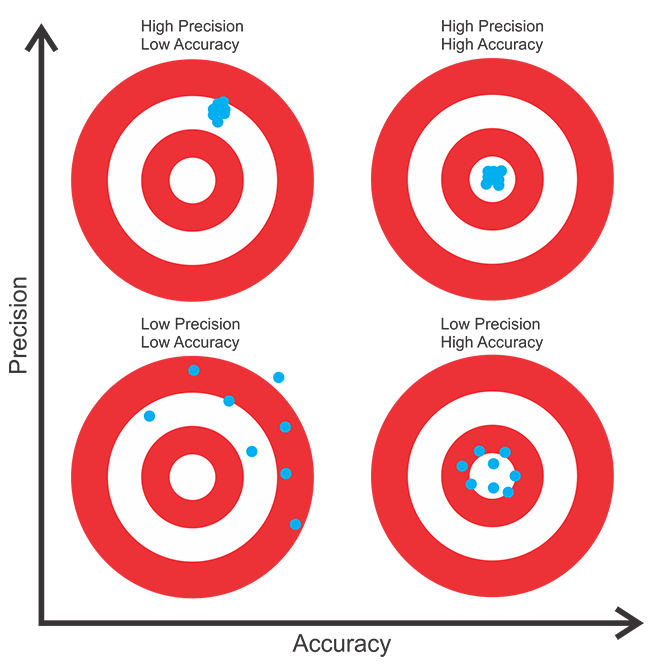
The key to excellent data starts with Accuracy and Precision. Accuracy is the ability to achieve the right value. Precision is the ability to reproduce the same value. For automated qPCR setup, you need to be able to do both – really well. The Myra pipetting robot can. The proof is in the results.
Means sample repeatability. With an automated pipetting precision of < 10% CV at 1 µl, the Myra robotic pipette will enhance your qPCR repeatability. Whether it’s for your gene expression studies or HRM genotyping, you will be confident in the data when setting up on the Myra pipetting robot.
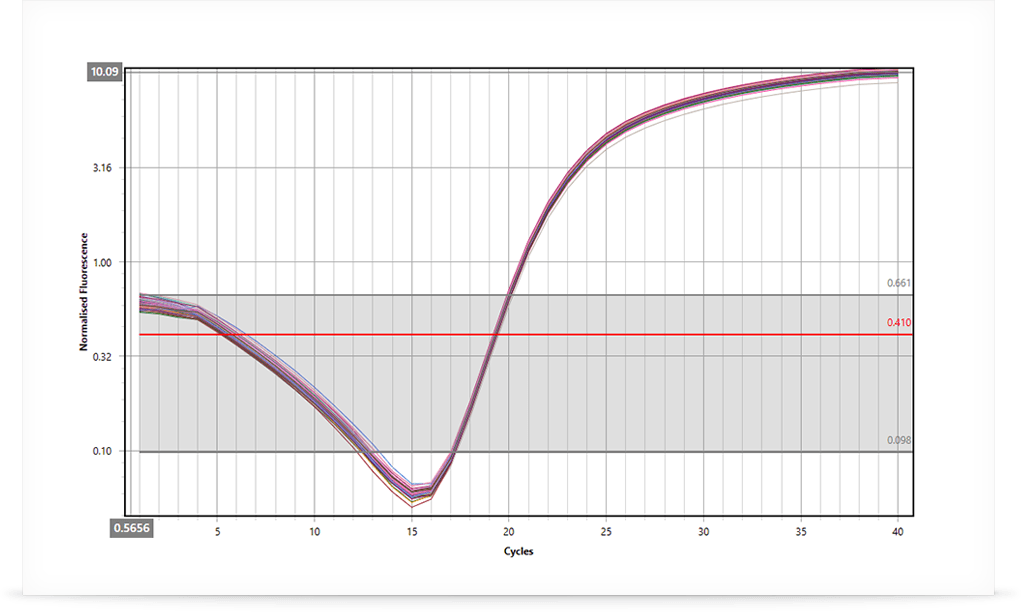
Figure 3. KRAS human genomic DNA target. 10,000 copies per reaction. 48 replicates setup using 1 µl of template per 25 µl reaction.
Cq = 19.23 | σ = 0.05 | Δmax-min= 0.25 | CV = 0.3%
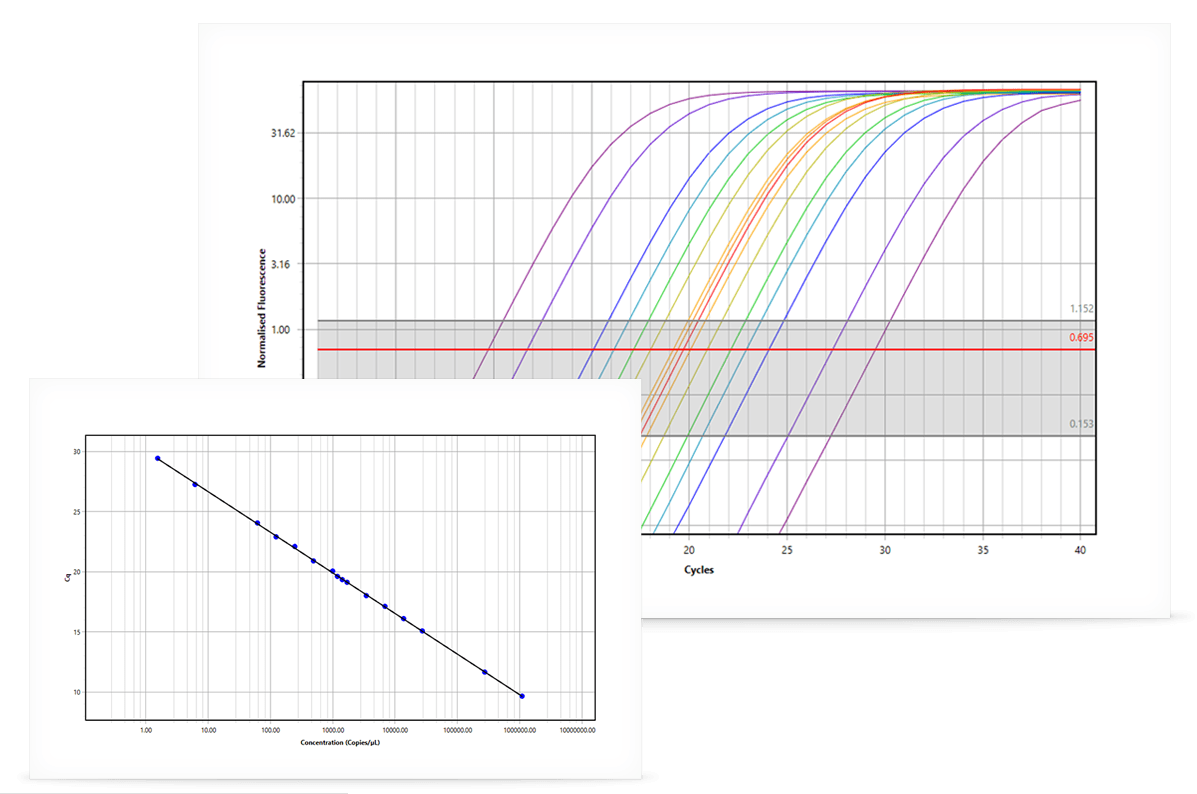
Even at low copy number. Maintain confidence in your data even when you are working with samples that are influenced by the unavoidable Poisson distribution. The Myra automated qPCR setup ensures that the only significant bias in your experiments comes from the probability of aspirating the template and not the performance of the automated pipettor.
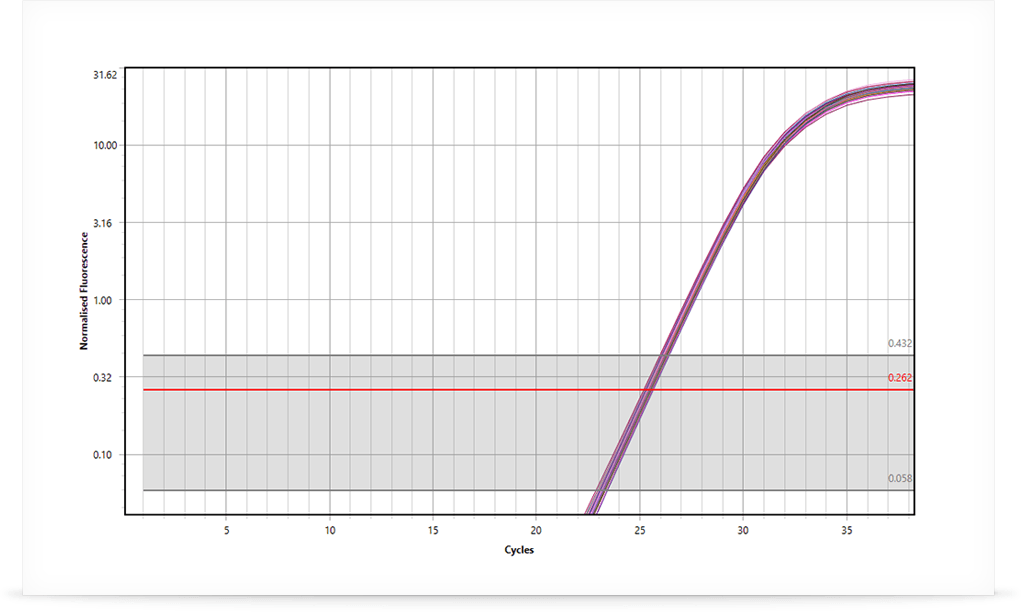
Reproducible results to ensure experimental integrity. We know that the most important part of any scientific work is being able to reproduce your data. With the Myra liquid handler and Mic real-time PCR instrument, that’s exactly what we aim for. Achieve equivalent experimental setup each time, every time. Even when working with very low copy numbers.
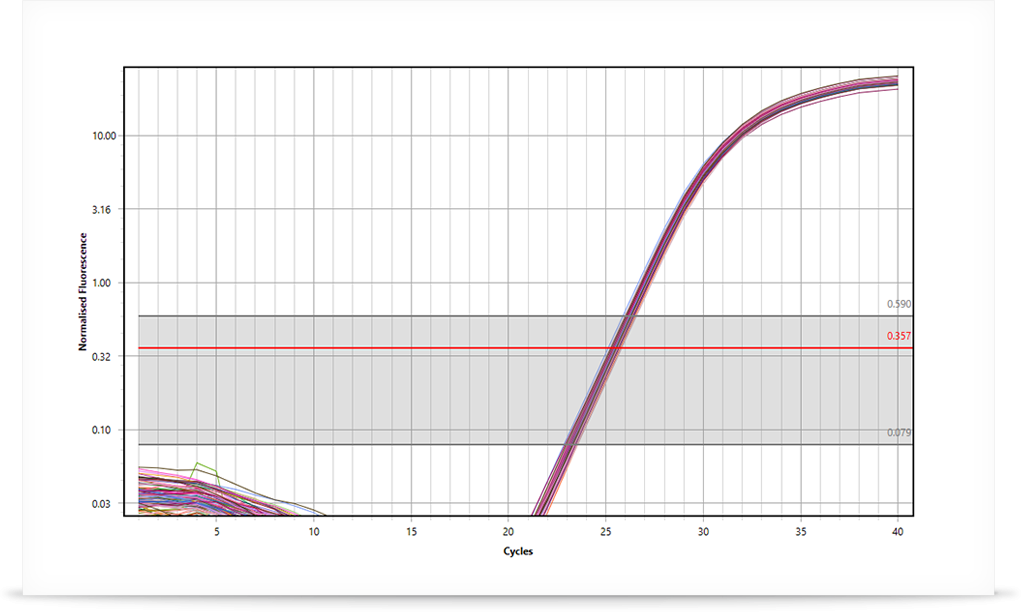
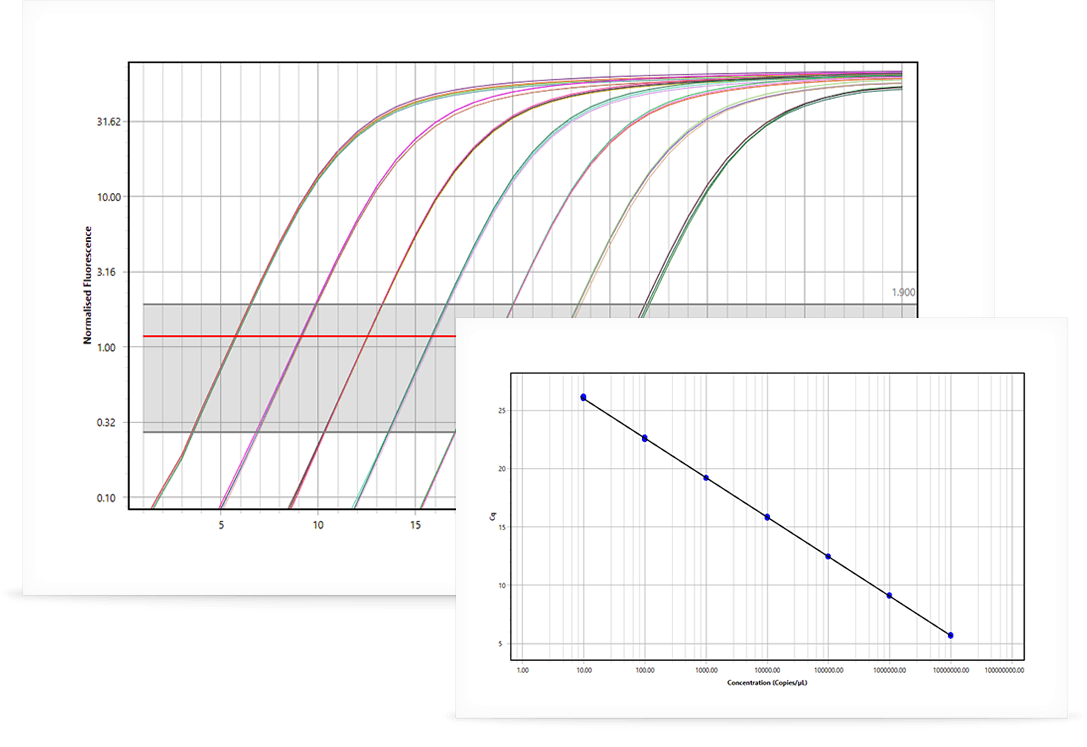
Even at the extreme ! Push the limits of your automated qPCR. A 1.2 fold dilution series is now the norm, not the exception when using the Myra automated liquid handling system. With Myra’s amazing pipetting accuracy and precision combined with Mic’s incredible temperature uniformity ; uncommon has become routine.
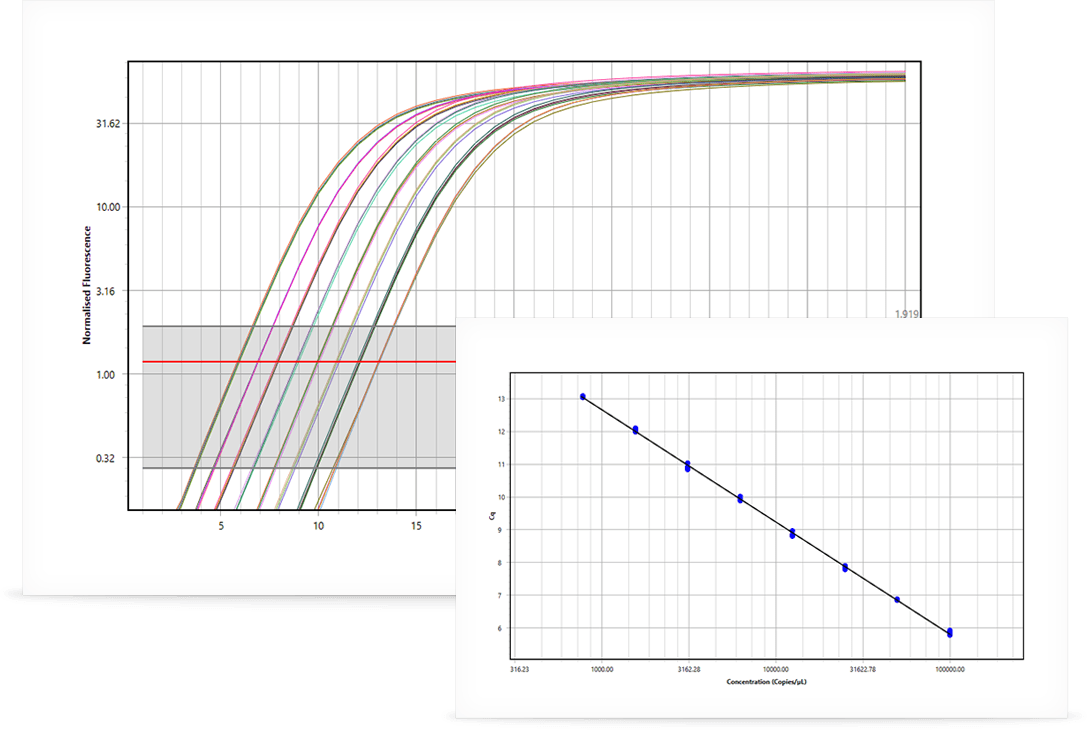
Be creative with your lab automation. With a robotic liquid handler capable of high pipetting accuracy and precision – we though we would be a little creative. So we decided to pipette a complex patterned dilution series to add a touch of flair to our already good looking robotic pipette. The result speaks for itself.
*coming soon
The Myra liquid handling system is highly regarded for its precision and reliability in setting up qPCR for NGS library quantification. Compared to other platforms, Myra produces superior results, making it a preferred choice for NGS library normalization and library pooling NGS tasks. One of the key advantages of using Myra is its level sensing feature, which can detect air pockets in wells – a common challenge that other platforms often struggle with. This capability ensures that each sample is pooled accurately, minimizing the risk of sample drop-outs.
Setting up normalization and pooling on using the Workbench software is a simple as four easy steps:
The software will calculate the rest for you. It also has smart features to help determine how to handle samples that might be too high or too low to be normalised. Say goodbye to having to calculate in Excel.
Bead cleanup is a tedious and complex task, but the Myra liquid handling system is easy to use, accurate, fast, efficient, and cost-effective for this purpose. Because pipetting precision is user-dependent, it can introduce variability that may affect reproducibility. Thus, automation of bead cleanup guarantees consistent and precise protocol execution, reducing the likelihood of user errors. This enhanced reproducibility is crucial for maintaining data quality and consistency.
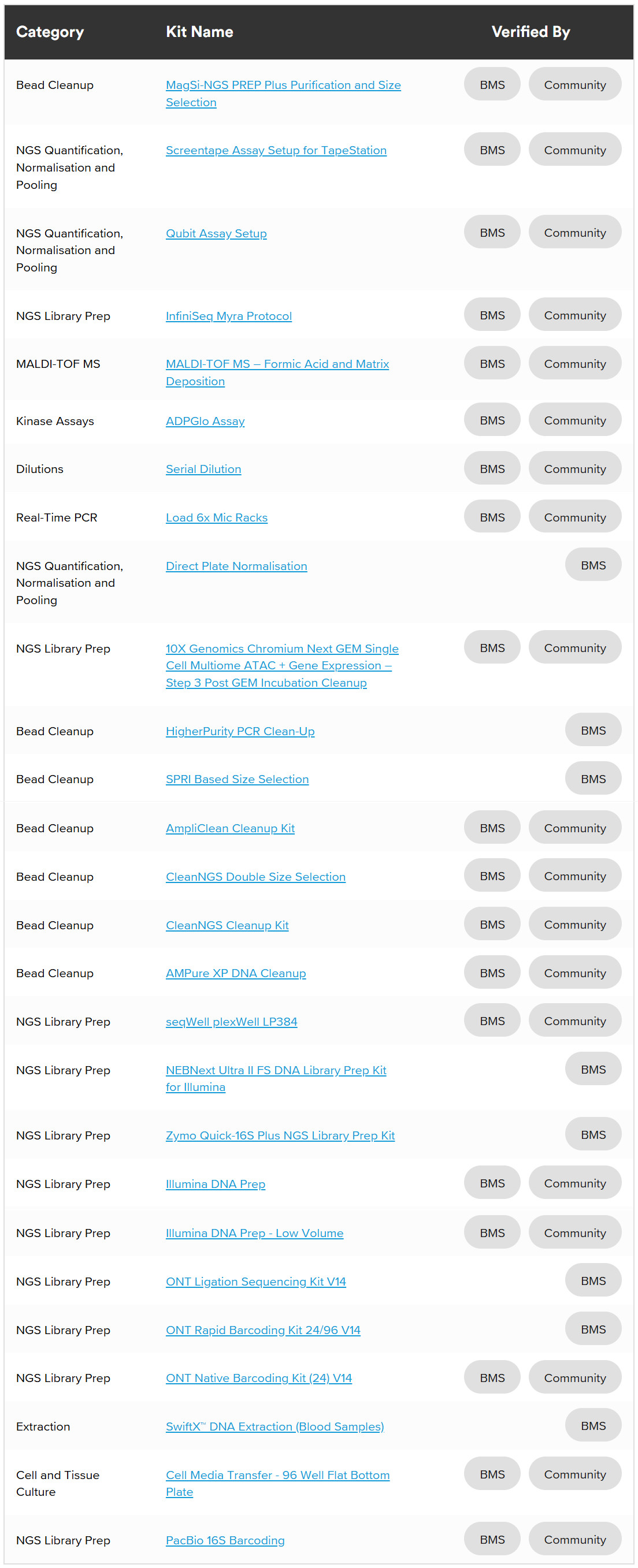
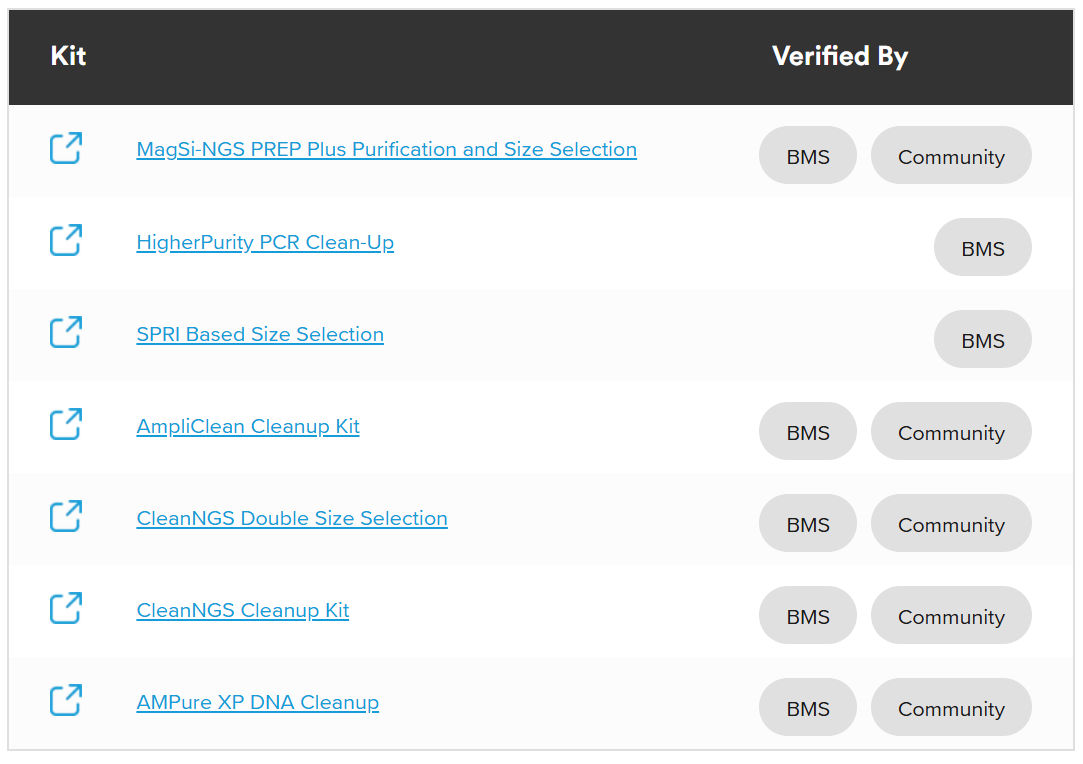
Browse a comprehensive table of all available templates on Myra, complete with direct links to specific MyraScript pages. Access protocol documentation via a dedicated PDF link. Verified options include templates for BMS, Partner (kit company), and the Myra community (customers) :
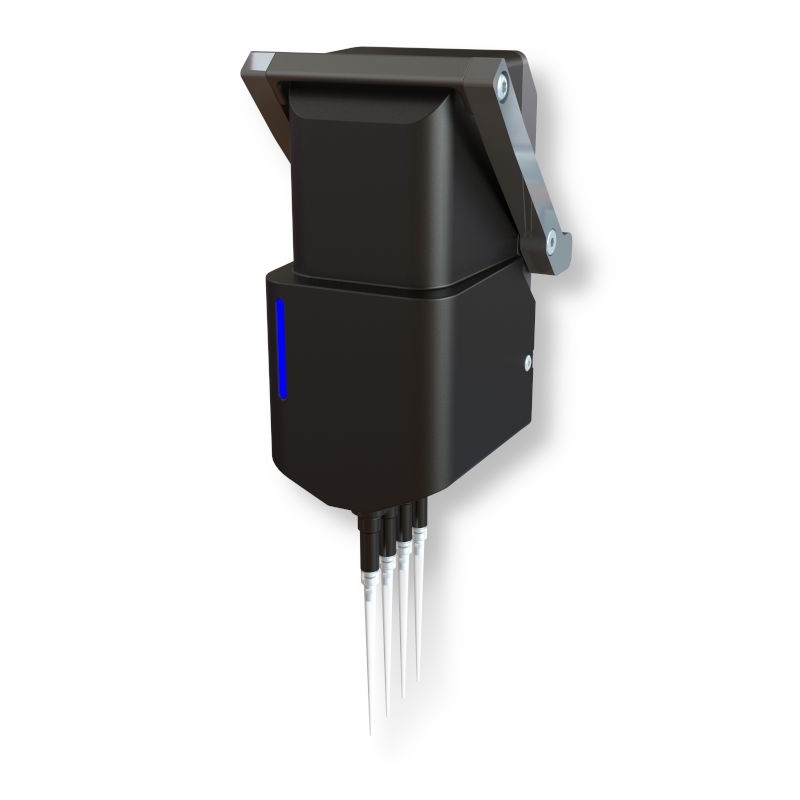
With the new 4-channel pipette, the purification time is 22 minutes for 8 samples, 32 minutes for 16 samples, and 41 minutes for 24 samples.
MyraScript is a new Python-based feature that can be used to develop fully customisable protocols. Full control of liquid transfer parameters, including pipetting speeds, delays, level sensing, tracking and mixing can be programmed by the user. Python is used in combination with a MyraScript API to configure plasticware and reagents on Deck Layout, and compile a list of operations for execution.
Visit Myra Script Library for access to an extensive collection of completed script runs for various protocols including matrix serial dilutions, complex normalisations, cell culture transfers, next-generation sequencing (NGS) applications and magnetic bead clean-up.
Performance |
|
|---|---|
| Position control | Closed loop, 100 μm resolution |
| Calibration | High precision camera |
Pipette |
|
| Interchangeable pipettes |
1-channel 1 – 50 μl 1-channel 1 – 20 μl 4-channel 1 – 50 μl |
| Liquid level detection | Pressure sensing |
| Tips per rack | 384 |
| Dispense modes | Single and multi |
| Precision | 1 μl : <10% CV 2 – 50 μl : <1% CV |
| Accuracy | 1 μl : <10% 2 – 50 μl : <1% |
Contamination control |
|
| Tip disposal type | Internal enclosed waste container |
| HEPA filter | 99.98% at 0.3 μm |
| UV lamp | High intensity 70 mW 280 nm UV LED |
Size |
|
| Dimensions (W x D x H) | 52.0 x 46.8 x 35.6 cm |
| Weight | 17 kg |
|
|
|
Communication |
|
| Type | USB 2.0 |
| PC requirements | Intel Core i3 or equivalent, 4 GB RAM, 5 GB hard disk, 1366 x 768 display |
Operating environment |
|
| Temperature | 18 – 30°C |
| Humidity | 30 – 80% |
A small pipetting robot with a vision to perfection. The world’s first liquid handling system that can see.
Features :